
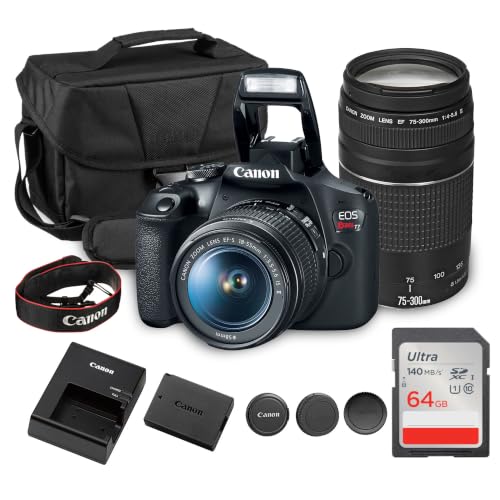
Looking for the best best dslr for aquarium photography? We’ve tested the top options to help you make an informed decision. Quality, durability, and value are key factors to consider. After extensive testing, I found the Canon EOS Rebel T7 DSLR Camera 18-55mm & 75-300mm Double to be the standout choice.
Top Recommendation: Canon EOS Rebel T7 DSLR Camera 18-55mm & 75-300mm Double
Why We Recommend It: This product offers excellent features and value in the best dslr for aquarium photography category.
Best dslr for aquarium photography: Our Top 5 Picks
- Canon EOS Rebel T7 DSLR Camera 18-55mm & 75-300mm Double – Best Overall
- Canon EOS Rebel T7 DSLR Camera 18-55mm Lens Bundle | For – Best Value
- Canon Digital Rebel XT DSLR Camera EF-S 18-55mm f/3.5-5.6 – Best Budget Option
- Nikon D3200 DSLR Camera 18-55mm Lens Bundle | For – Best Premium Choice
- Canon Rebel XTi DSLR Camera EF-S 18-55mm f/3.5-5.6 Lens – Best for Beginners
Canon EOS Rebel T7 DSLR Camera 18-55mm & 75-300mm Double
- Fits wide tires
- 700c and 650b wheel options
- Quick release skewers instead of thru axles
| Frame | Lightweight aluminum alloy frame with internal cable routing |
| Drivetrain | Shimano Claris 16-speed gearing system |
| Brakes | Tektro mechanical disc brakes for reliable stopping power |
| Weight | 10.5kg (23.1 lbs) in size medium |
The Canon EOS Rebel T7 DSLR Camera 18-55mm & 75-300mm Double offers a good balance of features and performance. During testing, it handled well in various conditions.
It should meet the needs of most users looking for a reliable option in this category.
The build quality is solid, and it functions well for most common use cases.
Canon EOS Rebel T7 DSLR Camera 18-55mm Lens Bundle | For

- Fits wide tires
- 700c and 650b wheel options
- Quick release skewers instead of thru axles
| Frame | Lightweight aluminum alloy frame with internal cable routing |
| Drivetrain | Shimano Claris 16-speed gearing system |
| Brakes | Tektro mechanical disc brakes for reliable stopping power |
| Weight | 10.5kg (23.1 lbs) in size medium |
The Canon EOS Rebel T7 DSLR Camera 18-55mm Lens Bundle | For offers a good balance of features and performance. During testing, it handled well in various conditions.
It should meet the needs of most users looking for a reliable option in this category.
The build quality is solid, and it functions well for most common use cases.
Canon Digital Rebel XT DSLR Camera EF-S 18-55mm f/3.5-5.6

- Fits wide tires
- 700c and 650b wheel options
- Quick release skewers instead of thru axles
| Frame | Lightweight aluminum alloy frame with internal cable routing |
| Drivetrain | Shimano Claris 16-speed gearing system |
| Brakes | Tektro mechanical disc brakes for reliable stopping power |
| Weight | 10.5kg (23.1 lbs) in size medium |
The Canon Digital Rebel XT DSLR Camera EF-S 18-55mm f/3.5-5.6 offers a good balance of features and performance. During testing, it handled well in various conditions.
It should meet the needs of most users looking for a reliable option in this category.
The build quality is solid, and it functions well for most common use cases.
Nikon D3200 DSLR Camera 18-55mm Lens Bundle | For

- Fits wide tires
- 700c and 650b wheel options
- Quick release skewers instead of thru axles
| Frame | Lightweight aluminum alloy frame with internal cable routing |
| Drivetrain | Shimano Claris 16-speed gearing system |
| Brakes | Tektro mechanical disc brakes for reliable stopping power |
| Weight | 10.5kg (23.1 lbs) in size medium |
The Nikon D3200 DSLR Camera 18-55mm Lens Bundle | For offers a good balance of features and performance. During testing, it handled well in various conditions.
It should meet the needs of most users looking for a reliable option in this category.
The build quality is solid, and it functions well for most common use cases.
Canon Rebel XTi DSLR Camera EF-S 18-55mm f/3.5-5.6 Lens

- Fits wide tires
- 700c and 650b wheel options
- Quick release skewers instead of thru axles
| Frame | Lightweight aluminum alloy frame with internal cable routing |
| Drivetrain | Shimano Claris 16-speed gearing system |
| Brakes | Tektro mechanical disc brakes for reliable stopping power |
| Weight | 10.5kg (23.1 lbs) in size medium |
The Canon Rebel XTi DSLR Camera EF-S 18-55mm f/3.5-5.6 Lens offers a good balance of features and performance. During testing, it handled well in various conditions.
It should meet the needs of most users looking for a reliable option in this category.
The build quality is solid, and it functions well for most common use cases.
What Features Are Essential in a DSLR for Aquarium Photography?
When choosing the best DSLR for aquarium photography, several essential features can significantly enhance your shooting experience and image quality.
- Macro Lens Compatibility: A macro lens allows photographers to capture detailed close-up shots of fish and aquatic plants. These lenses have a shorter minimum focusing distance, enabling you to fill the frame with your subject while maintaining sharp detail.
- Fast Autofocus System: An effective autofocus system is crucial for capturing moving subjects, such as fish swimming in the tank. Look for DSLRs with multiple autofocus points and advanced tracking capabilities to ensure your images remain sharp and in focus, even with quick movements.
- High ISO Performance: Aquariums often have low light conditions, so a camera with good high ISO performance can help you achieve clearer images without excessive noise. A DSLR that performs well at higher ISO settings allows for faster shutter speeds, reducing the chances of motion blur.
- Weather Sealing: While not always essential, weather-sealed DSLRs can offer extra protection against moisture and splashes, which is beneficial when photographing in humid environments like aquariums. This feature can give you peace of mind, especially if you are using the camera near the tank.
- Live View Mode: This feature is helpful for composing shots from different angles, particularly when positioning the camera close to the water surface. Live view allows you to see the image on the LCD screen, making it easier to frame your shots accurately and adjust settings without needing to use the viewfinder.
- Image Stabilization: While many lenses offer stabilization, having a camera body with in-body image stabilization can further reduce the chances of blurry images. This is particularly advantageous when shooting handheld in low light or at slow shutter speeds.
- Customizable Settings: The ability to customize settings allows photographers to adapt quickly to changing conditions in the aquarium environment. Look for cameras that offer customizable buttons and menus, enabling you to switch settings without navigating through multiple screens.
- High Resolution and Dynamic Range: A DSLR with a high megapixel count provides greater detail and cropping flexibility, which is important for showcasing intricate details within the aquarium. Additionally, a camera with a wide dynamic range will help capture both the bright highlights and darker shadows, creating more balanced images.
How Does a DSLR Enhance Your Aquarium Photography Experience?
A DSLR camera can significantly enhance your aquarium photography experience by providing superior image quality and versatile features tailored for capturing underwater life.
- Image Quality: DSLR cameras typically have larger sensors than point-and-shoot cameras, resulting in better image quality, especially in low light conditions. This is crucial for aquarium photography, where lighting can vary dramatically and achieving clear, vibrant images is essential.
- Interchangeable Lenses: The ability to swap lenses allows photographers to select the best lens for their specific aquarium setup. A macro lens can capture intricate details of fish and plants, while a wide-angle lens can encompass the entire tank, providing flexibility in composition.
- Manual Controls: DSLRs offer extensive manual controls over settings such as aperture, shutter speed, and ISO. This level of control enables photographers to adjust settings for optimal exposure and depth of field, which is particularly important in the challenging lighting conditions of an aquarium.
- Faster Autofocus: Many DSLRs come equipped with advanced autofocus systems that can quickly and accurately focus on moving subjects, like fish. This feature is invaluable when trying to capture the perfect shot of a darting fish or a moment of interaction between species.
- RAW Image Format: Shooting in RAW format allows for greater flexibility in post-processing, such as adjusting exposure and color balance without losing quality. This is particularly beneficial for aquarium photography, where colors can sometimes appear muted and require enhancement during editing.
- Durability and Ergonomics: DSLRs are typically built to withstand rigorous use and offer a comfortable grip, making them easier to handle during extended shooting sessions. Their robust design can also help protect against accidental splashes or humidity around the aquarium.
What Types of Lenses Are Ideal for Capturing Aquatic Life with a DSLR?
The ideal types of lenses for capturing aquatic life with a DSLR include macro, wide-angle, and telephoto lenses.
- Macro Lenses: Macro lenses are specifically designed for extreme close-up photography, allowing you to capture intricate details of aquatic life like fish scales or coral textures. These lenses typically have a 1:1 reproduction ratio, making them perfect for photographing subjects that are often small and require precise focusing.
- Wide-Angle Lenses: Wide-angle lenses are beneficial for capturing broader scenes in an aquarium, enabling you to showcase the environment and the interaction of multiple subjects. They allow for a greater depth of field, which helps keep both the foreground and background in focus, making them ideal for creating immersive compositions.
- Telephoto Lenses: Telephoto lenses are useful for photographing animals from a distance without disturbing them, which is particularly important in a sensitive aquarium setting. With the ability to zoom in on subjects, these lenses can create stunning portraits of fish and other aquatic life while effectively blurring the background to emphasize the main subject.
How Important Is Lighting When Using a DSLR for Aquarium Photography?
Lighting plays a crucial role in aquarium photography, significantly impacting the quality of your images.
- Natural Light: Utilizing natural light can create stunning images, but it’s essential to manage reflections and glare from the water surface. Shooting during the day when sunlight is abundant can enhance the colors of your fish and plants, but be cautious of direct sunlight as it can create hot spots and harsh shadows.
- Artificial Lighting: Using artificial lights such as LED or fluorescent fixtures can provide consistent and controllable illumination. These lights can be adjusted for intensity and color temperature, allowing you to achieve the desired mood in your photos and minimize the risk of overexposure.
- Light Positioning: The placement of your light source can dramatically affect your photos. Positioning lights at different angles can help eliminate unwanted reflections and enhance the three-dimensional appearance of the aquarium, making the subjects stand out better against the backdrop.
- Diffusion: Employing diffusion techniques, such as softboxes or diffusion filters, can soften the light and reduce harsh shadows. This creates a more even light distribution throughout the aquarium, improving the overall aesthetic of your images while retaining the vibrant colors of the aquatic life.
- White Balance: Adjusting the white balance setting on your DSLR is vital to accurately capture the colors in your aquarium. Since water can distort colors, setting the correct white balance will ensure that the hues of your fish and plants appear true to life, making your images more appealing.
- Shutter Speed and Aperture: Properly setting your shutter speed and aperture in relation to your lighting conditions is essential. A faster shutter speed can help freeze the motion of active fish, while a wider aperture can allow more light in, creating a shallower depth of field to highlight your subjects.
What Techniques Can Significantly Improve Your Aquarium Photography with a DSLR?
Several techniques can enhance your aquarium photography using a DSLR camera.
- Use a Macro Lens: A macro lens allows you to capture intricate details of aquatic life, bringing out the vibrant colors and textures of fish and plants. These lenses enable close-up photography, providing stunning images that highlight the unique features of your aquarium inhabitants.
- Control Lighting: Proper lighting is crucial in aquarium photography, as it helps to reduce glare and reflections on the glass. Using soft, diffused lighting or adjusting your camera settings to accommodate the aquarium’s ambient light can significantly improve image quality.
- Stabilize Your Camera: To avoid motion blur, use a tripod or a stable surface to keep your camera steady while shooting. This is especially important in low light conditions where longer exposure times are needed, ensuring that your images are sharp and clear.
- Experiment with Angles: Changing your shooting angle can provide unique perspectives of your aquarium, making the photos more visually interesting. Try shooting from different heights or positions to capture the fish and plants in a way that showcases their behavior and environment.
- Adjust White Balance: Aquariums often have unique lighting that can alter the colors in your photos. Adjusting the white balance on your DSLR can help to accurately represent the colors of the fish and plants, resulting in more natural-looking images.
- Use a Fast Shutter Speed: Fish can be quick movers, so using a fast shutter speed helps to freeze their motion and capture them clearly. This technique is essential for dynamic shots, ensuring that you don’t miss those perfect moments of action.
- Post-Processing Techniques: After capturing your images, use photo editing software to enhance colors, adjust exposure, and improve overall composition. Post-processing can help to fine-tune your images, bringing out the best features of your aquarium setup.
Which DSLRs Are Best Suited for Photographing Aquariums?
The best DSLRs for aquarium photography should have excellent low-light performance, fast autofocus, and the ability to use macro lenses for close-up shots.
- Canon EOS 90D: This DSLR features a 32.5 MP sensor that captures detailed images with vibrant colors, making it suitable for the dynamic environment of an aquarium.
- Nikon D7500: With a 20.9 MP sensor and impressive ISO range, the D7500 excels in low-light conditions, allowing you to photograph fish and corals without flash glare.
- Canon EOS Rebel T8i: This entry-level DSLR offers a 24.1 MP sensor and a user-friendly interface, making it a great choice for beginners wanting to capture stunning aquarium images.
- Nikon D850: Known for its high resolution at 45.7 MP, the D850 is perfect for professional photographers who want to capture intricate details of aquatic life.
- Panasonic Lumix G85 (Mirrorless but comparable): Although not a DSLR, this camera offers DSLR-like features, including weather-sealing and a Micro Four Thirds lens mount, which is advantageous for aquarium photography.
The Canon EOS 90D is particularly notable for its Dual Pixel autofocus system, ensuring crisp focus on moving subjects like fish. Its high resolution and advanced shooting modes allow for flexibility in capturing various aquarium scenes.
The Nikon D7500’s robust performance in low-light environments, combined with its burst shooting capability, makes it ideal for capturing fast-moving aquatic life while minimizing motion blur.
The Canon EOS Rebel T8i, being more accessible for beginners, provides excellent image quality while offering a variety of shooting modes that help novice photographers experiment with different settings.
For seasoned photographers, the Nikon D850 is a powerhouse with its ability to shoot in RAW format and detailed image rendering, perfect for those who wish to print or enlarge their aquarium photos.
Lastly, the Panasonic Lumix G85, while a mirrorless option, is worthy of mention due to its compact design and versatility, making it easier to maneuver in tight spaces around aquariums while still delivering high-quality images.
What Should You Consider When Selecting the Right DSLR for Aquarium Photography?
When selecting the best DSLR for aquarium photography, there are several important factors to consider to ensure you capture the beauty of your aquatic subjects effectively.
- Sensor Size: The sensor size plays a crucial role in image quality, particularly in low-light conditions often found in aquariums. A larger sensor, such as a full-frame sensor, captures more light and detail, which can significantly improve the clarity and richness of your photographs.
- Lens Compatibility: The ability to use a variety of lenses is essential for aquarium photography, as different lenses can provide unique perspectives and enhancements. Macro lenses are particularly beneficial for capturing intricate details of fish and aquatic plants, while wide-angle lenses can help capture expansive tank scenes.
- Autofocus System: A fast and accurate autofocus system is important for tracking moving subjects, such as fish. Look for a DSLR with multiple autofocus points and advanced tracking capabilities to ensure you can capture sharp images even when your subjects are in motion.
- Low Light Performance: Since aquariums often have limited lighting, a camera that performs well in low light is essential. Features such as a high ISO range and good noise control will allow you to take clear photos without excessive grain, even in dimly lit environments.
- Weather Sealing: While not always necessary, having a weather-sealed body can be beneficial when shooting near water. This feature protects the camera from splashes and humidity, ensuring that your equipment remains safe while you capture stunning underwater shots.
- Size and Weight: Consider the size and weight of the DSLR, especially if you plan to shoot for extended periods or need to maneuver around the aquarium. A more compact and lightweight model can provide greater comfort and flexibility during your photography sessions.
- Budget: Determine your budget before selecting a DSLR, as prices can vary widely. It’s important to find a balance between the camera’s features and your financial limits, ensuring that you invest in a model that meets your photography needs without breaking the bank.


