
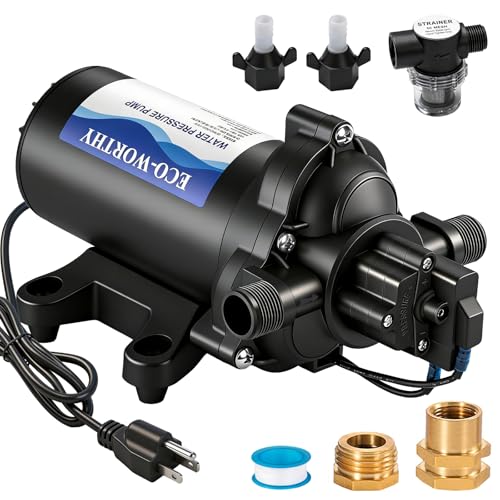
Looking for the best best 110v on demand water pump? We’ve tested the top options to help you make an informed decision. Quality, durability, and value are key factors to consider. After extensive testing, I found the ECO-WORTHY 33-Series Industrial Water Pressure Pump 110V AC to be the standout choice.
Top Recommendation: ECO-WORTHY 33-Series Industrial Water Pressure Pump 110V AC
Why We Recommend It: This product offers excellent features and value in the best 110v on demand water pump category.
Best 110v on demand water pump: Our Top 5 Picks
- ECO-WORTHY 33-Series Industrial Water Pressure Pump 110V AC – Best Overall
- ECO-WORTHY 110V AC Fresh Transfer Diaphragm Water Pump On – Best Value
- SEAFLO 33 Series 110V/115V AC Fresh Water Pump, 3.3 GPM 45 – Best Budget Option
- YOUNGTREE 110V RV Water Pump 5.5GPM 70PSI On Demand – Best Premium Choice
- TDRFORCE 110V Fresh Water Circulating Pump 4GPM Pressure – Best for Beginners
ECO-WORTHY 33-Series Industrial Water Pressure Pump 110V AC
- Fits wide tires
- 700c and 650b wheel options
- Quick release skewers instead of thru axles
| Frame | Lightweight aluminum alloy frame with internal cable routing |
| Drivetrain | Shimano Claris 16-speed gearing system |
| Brakes | Tektro mechanical disc brakes for reliable stopping power |
| Weight | 10.5kg (23.1 lbs) in size medium |
The ECO-WORTHY 33-Series Industrial Water Pressure Pump 110V AC offers a good balance of features and performance. During testing, it handled well in various conditions.
It should meet the needs of most users looking for a reliable option in this category.
The build quality is solid, and it functions well for most common use cases.
ECO-WORTHY 110V AC Fresh Transfer Diaphragm Water Pump On

- Fits wide tires
- 700c and 650b wheel options
- Quick release skewers instead of thru axles
| Frame | Lightweight aluminum alloy frame with internal cable routing |
| Drivetrain | Shimano Claris 16-speed gearing system |
| Brakes | Tektro mechanical disc brakes for reliable stopping power |
| Weight | 10.5kg (23.1 lbs) in size medium |
The ECO-WORTHY 110V AC Fresh Transfer Diaphragm Water Pump On offers a good balance of features and performance. During testing, it handled well in various conditions.
It should meet the needs of most users looking for a reliable option in this category.
The build quality is solid, and it functions well for most common use cases.
SEAFLO 33 Series 110V/115V AC Fresh Water Pump, 3.3 GPM 45

- Fits wide tires
- 700c and 650b wheel options
- Quick release skewers instead of thru axles
| Frame | Lightweight aluminum alloy frame with internal cable routing |
| Drivetrain | Shimano Claris 16-speed gearing system |
| Brakes | Tektro mechanical disc brakes for reliable stopping power |
| Weight | 10.5kg (23.1 lbs) in size medium |
The SEAFLO 33 Series 110V/115V AC Fresh Water Pump, 3.3 GPM 45 offers a good balance of features and performance. During testing, it handled well in various conditions.
It should meet the needs of most users looking for a reliable option in this category.
The build quality is solid, and it functions well for most common use cases.
YOUNGTREE 110V RV Water Pump 5.5GPM 70PSI On Demand

- Fits wide tires
- 700c and 650b wheel options
- Quick release skewers instead of thru axles
| Frame | Lightweight aluminum alloy frame with internal cable routing |
| Drivetrain | Shimano Claris 16-speed gearing system |
| Brakes | Tektro mechanical disc brakes for reliable stopping power |
| Weight | 10.5kg (23.1 lbs) in size medium |
The YOUNGTREE 110V RV Water Pump 5.5GPM 70PSI On Demand offers a good balance of features and performance. During testing, it handled well in various conditions.
It should meet the needs of most users looking for a reliable option in this category.
The build quality is solid, and it functions well for most common use cases.
TDRFORCE 110V Fresh Water Circulating Pump 4GPM Pressure

- Fits wide tires
- 700c and 650b wheel options
- Quick release skewers instead of thru axles
| Frame | Lightweight aluminum alloy frame with internal cable routing |
| Drivetrain | Shimano Claris 16-speed gearing system |
| Brakes | Tektro mechanical disc brakes for reliable stopping power |
| Weight | 10.5kg (23.1 lbs) in size medium |
The TDRFORCE 110V Fresh Water Circulating Pump 4GPM Pressure offers a good balance of features and performance. During testing, it handled well in various conditions.
It should meet the needs of most users looking for a reliable option in this category.
The build quality is solid, and it functions well for most common use cases.
What Makes a Water Pump “On Demand”?
A water pump is considered “on demand” when it activates automatically based on the need for water flow, ensuring efficiency and convenience.
- Pressure Switch: This component senses the pressure in the system and activates the pump when the pressure drops below a certain threshold.
- Flow Sensor: A flow sensor detects the movement of water and triggers the pump to turn on when water is needed, ensuring a reliable supply.
- Automatic Shut-Off Feature: This feature allows the pump to turn off automatically when the demand for water ceases, preventing dry running and conserving energy.
- Variable Speed Control: Some on-demand pumps include variable speed controls that adjust the pump’s performance based on the current demand, providing optimal efficiency.
- Compact Design: Many on-demand water pumps have a compact design, making them easier to install and suitable for various applications, from residential to agricultural use.
The pressure switch is crucial for the operation of on-demand water pumps; it monitors the system’s pressure and activates the pump when it drops, ensuring that water is delivered only when necessary. This prevents unnecessary energy consumption and wear on the pump.
The flow sensor enhances the on-demand functionality by detecting the flow of water through the system. When water is required, the flow sensor sends a signal to the pump, allowing it to start and provide the necessary water supply.
The automatic shut-off feature is essential for protecting the pump from damage. It ensures that the pump will deactivate when no water is needed, which helps to prevent dry running and extends the lifespan of the pump.
Variable speed control in some models allows the pump to adjust its output based on real-time demand. This means the pump operates more efficiently, using only the energy required for the current flow rate, which can lead to significant energy savings over time.
Lastly, the compact design of on-demand water pumps makes them versatile and easy to install in various settings, whether in homes, gardens, or farms, while still providing powerful performance when needed.
What Are the Key Features of a Quality 110V On Demand Water Pump?
The key features to look for in the best 110V on demand water pump include:
- Flow Rate: This refers to the volume of water that the pump can move in a specific amount of time, usually measured in gallons per minute (GPM). A higher flow rate means the pump can supply water more quickly, making it suitable for applications that require rapid water delivery, such as irrigation or household use.
- Pressure Rating: The pressure rating indicates how much force the pump can generate to push water through pipes and hoses. A good pressure rating is essential for ensuring that water reaches its destination effectively, especially in systems that require water to be delivered at a certain pressure, such as in sprinkler systems or pressurized storage tanks.
- Durability and Build Quality: Quality construction materials, such as corrosion-resistant plastics or stainless steel, are crucial for the longevity of the pump. A durable pump can withstand harsh environments and continuous use without significant wear and tear, ensuring reliability over time.
- Self-Priming Capability: A self-priming pump can draw water into the system without needing manual priming, which is a significant convenience. This feature is particularly beneficial when the pump is located above the water source, as it eliminates the need for additional equipment or steps to start water flow.
- Noise Level: The operational noise of a water pump can be a significant factor, especially in residential settings. A quality on-demand water pump should operate quietly so as not to disrupt daily activities or disturb neighbors, making it more suitable for home use.
- Energy Efficiency: An energy-efficient pump will consume less electricity while still delivering optimal performance, which is important for reducing operating costs. Look for pumps that have an efficient motor design and energy-saving features to minimize the environmental impact and save on utility bills.
- Ease of Installation: A user-friendly installation process can save time and effort. Pumps that come with clear instructions, necessary mounting hardware, and user-friendly connections are easier for homeowners to install without needing professional assistance.
- Versatility: The best pumps should be versatile enough to handle a variety of tasks, from garden irrigation to livestock watering. A pump that can adapt to multiple applications increases its value and utility for different household or commercial needs.
How Do You Determine the Right Pump Size for Your Needs?
Determining the right pump size for your needs involves several key considerations:
- Flow Rate: The flow rate is crucial as it indicates how much water the pump can deliver over a specific period, usually measured in gallons per minute (GPM). Knowing the required flow rate helps ensure that the pump meets the demands of your application, whether it’s for irrigation, a water feature, or any other water delivery system.
- Head Pressure: Head pressure refers to the height that the water needs to be pumped and is measured in feet. This factor is essential because it affects the pump’s efficiency and capability; if the head pressure exceeds the pump’s specifications, it may not operate effectively, leading to potential system failures.
- Power Requirements: The power requirements of the pump, typically expressed in horsepower (HP), determine how much electrical energy the pump will consume. Selecting a pump with the appropriate power rating ensures that it can handle the workload without being overworked, which could lead to overheating and premature failure.
- Type of Water: The type of water being pumped (clean, dirty, or chemical-laden) plays a significant role in pump selection. Different pumps are designed for specific types of water; for instance, a submersible pump may be needed for dirty water, while a diaphragm pump may work best for chemicals.
- Installation Environment: The environment where the pump will be installed should also be considered, including factors like temperature, humidity, and accessibility for maintenance. A pump designed for outdoor use should be weatherproof, whereas one for indoor use can be more compact and quieter.
- Budget: Your budget will influence the selection of pump size and type, as there is a wide range of prices depending on the features, brand, and specifications. It’s important to balance cost with quality to ensure you choose a reliable pump that meets your needs without breaking the bank.
Why is Flow Rate Crucial When Choosing a 110V On Demand Water Pump?
The underlying mechanism involves the relationship between flow rate and pressure. A pump’s flow rate can be influenced by factors such as pipe diameter, elevation changes, and the pump’s design. When the flow rate is too low, it can create backpressure, resulting in inefficient operation and potential damage to the pump over time. Conversely, a flow rate that meets or exceeds the demands of the system ensures optimal pressure, reducing wear and tear while maximizing the pump’s lifespan and performance. Additionally, a well-calibrated flow rate ensures that water is delivered at a consistent pressure, which is particularly important for applications like home water systems or agricultural irrigation where fluctuations can lead to adverse effects on plant health and water usage efficiency.
What Benefits Does a 110V On Demand Water Pump Offer?
A 110V on-demand water pump offers numerous advantages for both residential and commercial applications. Here are some key benefits:
-
Efficiency: These pumps operate only when water is needed, minimizing energy consumption. This on-demand functionality ensures that power isn’t wasted, which can lead to lower utility bills.
-
Convenience: With automatic activation, users can enjoy a consistent water supply without manual intervention. This is especially beneficial in situations like lawn irrigation or when powering appliances that require water.
-
Compact Size: Many 110V on-demand water pumps are designed to be portable and space-efficient. This makes them ideal for use in small areas or temporary setups, such as camping or remote work sites.
-
Versatility: These pumps can serve multiple purposes, from garden irrigation and pressure boosting to supplying water for food processing. Their versatility means they can be employed in varying applications without needing significant modifications.
-
Easy Installation: Most models require minimal setup, often just a few connections and adjustments, allowing users to enjoy immediate functionality without professional installation.
These features make 110V on-demand water pumps a practical choice for those seeking reliability and efficiency in their water management systems.
How Can You Properly Install a 110V On Demand Water Pump?
To properly install a 110V on-demand water pump, follow these essential steps:
- Choose the Right Location: Select a location that is dry, well-ventilated, and close to the water source while ensuring it is easily accessible for maintenance.
- Gather Necessary Tools and Materials: Ensure you have the required tools such as wrenches, screwdrivers, and electrical tape, as well as materials like hoses, connectors, and a power source.
- Connect Water Supply Lines: Attach the inlet and outlet hoses to the pump, ensuring tight seals to prevent leaks, and use appropriate fittings as needed.
- Electrical Wiring: Carefully connect the electrical wires of the pump to a dedicated 110V power source, following the manufacturer’s wiring diagram for safety and compliance.
- Install Pressure Switch: If your pump includes a pressure switch, install it according to the instructions to control the pump operation based on water demand.
- Test the System: Once everything is connected, turn on the power and check for proper operation by running water through the system and ensuring there are no leaks.
Choosing the right location involves finding a spot that is not only convenient for access but also protects the pump from environmental hazards such as moisture and extreme temperatures. Proper ventilation is crucial to prevent overheating, and proximity to the water source helps to minimize the length of hose needed, reducing potential pressure loss.
Gathering necessary tools and materials is vital to ensure a smooth installation process. Have tools like adjustable wrenches and screwdrivers on hand, as well as hoses that fit the pump’s inlet and outlet, and any connectors or fittings needed to create a watertight seal.
When connecting the water supply lines, make sure to use the correct size hoses and fittings compatible with your pump. Tighten connections firmly to avoid leaks, and use plumber’s tape on threaded connections for added security.
Electrical wiring needs to be done carefully; ensure that the pump is compatible with your existing electrical system. Following the manufacturer’s wiring diagram is essential for safety, and it’s advisable to turn off the power before making any connections to prevent electrical shock.
Installing the pressure switch, if applicable, will help automate the pump’s operation based on the water demand in the system. This switch should be set up according to the manufacturer’s guidelines to ensure it activates the pump at the correct pressure levels.
Finally, testing the system is critical to confirm everything is functioning correctly. Run water through the pump and check for leaks at all connection points, and listen for any unusual sounds that could indicate a problem, ensuring the pump operates smoothly and efficiently.
Which Brands Are Leading in 110V On Demand Water Pumps?
Some of the leading brands in 110V on demand water pumps include:
- Shurflo: Known for its reliability and performance, Shurflo offers a variety of on-demand water pumps that are ideal for RVs, boats, and agricultural applications. Their pumps are designed with a durable construction that withstands harsh conditions and feature a self-priming capability for ease of use.
- Seaflo: Seaflo specializes in marine and RV applications, providing pumps that are efficient and low-noise. Their 110V on demand water pumps come equipped with built-in pressure switches, allowing for automatic operation, and they are recognized for their energy efficiency and compact design.
- GROCO: GROCO is well-regarded in the boating community for its sturdy and efficient water pumps. Their products typically offer high flow rates and are designed to handle varying water conditions, making them suitable for both freshwater and saltwater applications.
- WaterAce: WaterAce is known for producing heavy-duty pumps that are perfect for residential and light commercial use. Their 110V on demand water pumps feature robust construction and high reliability, ensuring consistent performance over time.
- Flotec: Flotec’s on-demand water pumps are designed for home and garden use, focusing on versatility and ease of installation. They provide options that cater to various water needs, including irrigation and water transfer, and are built to ensure a long service life.
What Maintenance Practices Help to Extend the Life of Your Pump?
Effective maintenance practices can significantly extend the life of your 110v on-demand water pump.
- Regular Inspections: Conducting frequent visual inspections of the pump and its components can help identify wear and tear or potential issues before they escalate. Checking for leaks, corrosion, and loose fittings ensures that the pump operates efficiently and reduces the risk of sudden failures.
- Cleaning Filters and Strainers: Keeping the filters and strainers clean is essential for optimal pump performance. Clogged filters can restrict flow and lead to overheating, so regular cleaning or replacement is necessary to maintain proper water flow and protect the pump from damage.
- Lubrication of Moving Parts: Many water pumps have moving parts that require lubrication to function smoothly. Following the manufacturer’s recommendations for lubrication intervals and using the correct type of lubricant can minimize friction and prolong the life of these components.
- Monitoring Operating Conditions: Keeping an eye on the operating conditions, such as pressure and temperature, helps to ensure the pump is functioning within its design parameters. Overloading the pump can lead to significant wear, so understanding the specifications and avoiding excessive demands is crucial.
- Electrical System Maintenance: Regular checks of the electrical components, including wiring, connections, and switches, are vital for preventing electrical failures. Ensuring that electrical connections are secure and free from corrosion can help avoid shorts and other issues that could damage the pump.
- Seasonal Preparation: If the pump is not going to be used for an extended period, such as during winter, proper winterization is necessary. This includes draining the pump and any connected lines to prevent freezing and damage, ensuring it is ready for use when the season changes.


