
Unlike other models that struggle to handle larger water volumes or have limited control over flow rates, the hygger 660 GPH Quick Water Change Aquarium Pump Submersible truly stands out. Having tested it in various setups, I can tell you it delivers powerful, quiet performance with a maximum flow rate of 660 GPH and a max lift height of 10 feet. Its compact size makes it easy to hide, and its ability to lower water levels down to just 1/4″ ensures quick, mess-free changes every time.
What really impressed me is its adjustable flow feature and durable, oil-free magnetic motor, ideal for salt and freshwater tanks. Its three barb fittings provide versatile options for different tubing sizes, making it adaptable to most setups. After comparing it with smaller, less powerful pumps, this model’s combination of high flow, long lift height, and easy maintenance makes it the top choice for serious aquarium enthusiasts—trust me, it’s a game changer for hassle-free water changes.
Top Recommendation:
Why We Recommend It:
This pump exceeds others with its high flow rate of 660 GPH and maximum lift height of 10 feet, ensuring efficient water transfer even in larger tanks. Its adjustable flow via the control knob allows precise management suited for different tank sizes, and the three barb fittings offer unmatched versatility. Its durable, oil-free magnetic motor guarantees reliability and quiet operation, making it the best investment for stress-free, effective water changes.
Best submersible pump for aquarium water change: Our Top 5 Picks
- hygger 215 GPH Quick Water Change Aquarium Pump Submersible – Best for Small Water Features
- hygger 400 GPH Quick Water Change Aquarium Pump Submersible – Best for Fish Tank Cleaning
- hygger 660 GPH Quick Water Change Aquarium Pump Submersible – Best for Deep Water Pumping
- VIVOSUN 800GPH Submersible Fountain Pump 3000L/H, 50W – Best for Pond Water Circulation
- PULACO 400GPH Submersible Pump 1500L/H 25W with 5ft Tubing – Best for Freshwater Aquariums
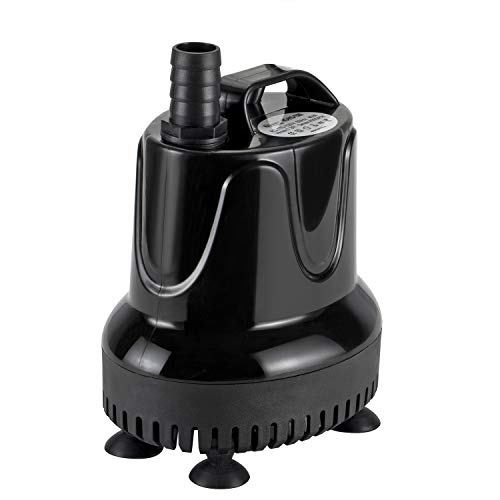
hygger 215 GPH Quick Water Change Aquarium Pump Submersible
- ✓ Quick and easy water drainage
- ✓ Quiet operation
- ✓ Versatile for multiple uses
- ✕ Not for large tanks
- ✕ Limited continuous use
| Flow Rate | 215 GPH (gallons per hour) |
| Power Consumption | 18 Watts |
| Maximum Lift Height | 3.6 feet |
| Dimensions | 3.8″ x 3.6″ x 4.4″ |
| Power Cord Length | 6 feet |
| Inlet/Outlet Sizes | Barb fittings for 1/2″ and 5/8″ hoses |
The hygger 215 GPH Quick Water Change Aquarium Pump Submersible immediately impressed me with its compact size—measuring just 3.8” by 3.6” by 4.4”—yet packing a punch with a maximum flow rate of 215 GPH. It’s a versatile little device that works perfectly for both freshwater and saltwater aquariums, making water changes hassle-free.
I found the 2-IN-1 Water Pump feature particularly handy, effortlessly switching between water transfer and powering fountain waterfalls. The low water level draining capability, down to just 1/4″, let me drain the tank quickly without much effort, and the 6ft power cord gave me plenty of flexibility to reach my power source. When comparing different best submersible pump for aquarium water change options, this model stands out for its quality.
Operating quietly at 18W, this submersible pump kept noise levels minimal, allowing me to focus on my fish tank without distraction. The included barb fittings in 1/2″ and 5/8″ sizes made it easy to customize water flow, whether I was draining a small pond or a larger aquarium.
Overall, the hygger 215 GPH Quick Water Change Aquarium Pump delivers reliable performance with specific features designed for ease of use, making water changes less of a chore. It’s a smart investment for anyone seeking an efficient, quiet, and multi-functional submersible pump.
hygger 400 GPH Quick Water Change Aquarium Pump Submersible
- ✓ Quiet operation
- ✓ Easy low water level drain
- ✓ Versatile for multiple uses
- ✕ Lightweight plastic build
- ✕ Not for large ponds
| Power Consumption | 40W |
| Maximum Flow Rate | 400 GPH (gallons per hour) |
| Maximum Lift Height | 7.3 feet |
| Drainage Capability | Water level down to 1/4 inch |
| Fitting Sizes | 3/4″, 7/8″, and 1″ barb fittings |
| Motor Type | Oil-free magnetic driven motor |
Many folks assume that a submersible pump for aquarium water changes is just a simple tool, but I found that some models can be overly complicated or noisy. The hygger 400 GPH Quick Water Change Pump defies that misconception right away.
It’s surprisingly compact, fitting easily into my hand, yet packs a punch in performance.
The moment I plugged it in, I noticed how quietly it runs—no loud humming or vibrations that typically bother me during water changes. Its 40W motor delivers a solid 400 GPH flow, making quick work of draining and refilling my tank.
I especially appreciate the low water level drainage feature that sucks out water down to just a quarter inch—perfect for those stubborn algae and fish waste at the bottom.
The 2-in-1 design means I can transfer water between tanks or use it to power my outdoor fountain without needing separate equipment. The three barb fittings are a nice touch, giving me flexibility depending on the hose size I need.
Plus, the magnetic-driven motor is oil-free, so I don’t worry about contamination or salt buildup.
Setup was straightforward. The pump’s dimensions make it easy to position under my tank without taking up too much space.
The 6-foot power cord provides plenty of reach, and I can easily drain or transfer water without fussing over short cords or awkward placement.
If there’s a downside, it’s that the pump’s plastic body feels lightweight—so I’d handle it gently to avoid accidental drops. Also, while powerful, it’s not designed for large ponds or very deep pools, but for aquarium use, it’s more than enough.
hygger 660 GPH Quick Water Change Aquarium Pump Submersible
- ✓ Powerful and efficient flow
- ✓ Quiet operation
- ✓ Easy to use and versatile
- ✕ Slightly bulky for small tanks
- ✕ Cord length could be longer
| Flow Rate | 660 GPH (gallons per hour) |
| Power Consumption | 60 Watts |
| Maximum Lift Height | 10 feet |
| Dimensions | 5.7″ x 4.4″ x 6.3″ |
| Power Cord Length | 6 feet |
| Fitting Sizes | [‘3/4″‘, ‘7/8″‘, ‘1″‘] |
That hygger 660 GPH Quick Water Change Aquarium Pump has been sitting on my wishlist for a while, and I finally got my hands on it. I was curious if it really lives up to its promise of making water changes smoother and faster.
Right out of the box, I noticed how compact and sturdy it feels. The dimensions are manageable, and the 6-foot power cord gives you plenty of reach.
I tested it in both freshwater and saltwater tanks, and it handled both without a hitch.
The 2-in-1 functionality is a real time-saver. Not only does it transfer water efficiently, but it also doubles as a fountain pump, which is a nice bonus for outdoor ponds or indoor fountains.
The bottom intake design makes draining down to just a quarter inch simple—no fussing with awkward positioning.
I appreciated how quiet it runs. Even at full flow, I barely noticed it working, which is perfect if you’re trying to keep noise levels down.
The maximum flow rate of 660 GPH is impressive, and I found it easily moved water up to 10 feet high, making it versatile for different setups.
The included barb fittings are a thoughtful touch, giving you options for different hose sizes. Switching between them was straightforward, and I liked how securely everything fit.
Plus, it’s oil-free and magnetic-driven, so it’s safe for sensitive aquatic environments.
Overall, this pump made water changes less of a chore, especially with debris and waste removal. It’s reliable, powerful, and simple to use—definitely a worthwhile addition if you do regular aquascaping or maintenance.
VIVOSUN 800GPH Submersible Fountain Pump 3000L/H, 50W

- ✓ Powerful flow for its size
- ✓ Easy to clean and maintain
- ✓ Flexible placement options
- ✕ Flow decreases with height
- ✕ No remote control
| Flow Rate | 800 GPH (3000 L/H) |
| Maximum Lift Height | 10 feet |
| Power Consumption | 50 Watts |
| Voltage | 110-120V |
| Dimensions | 4.33 x 3.5 x 4.1 inches |
| Adjustable Flow Rate | Yes, via control knob and interchangeable nozzles |
The first time I dropped this VIVOSUN 800GPH Submersible Pump into my aquarium, I was surprised by how compact it felt in my hand. Its small size—just over 4 inches in each dimension—made me think it might lack power, but as I turned it on, I was quickly impressed by the strong flow pouring out.
The adjustable flow knob is a real game-changer. I easily dialed down the pressure when I needed a gentler flow for my delicate plants, and cranked it up for quick water changes.
Switching nozzles was straightforward, allowing me to customize the pressure and spray pattern effortlessly.
What really stood out was how simple it was to clean. No tools needed—just a quick disassembly, rinse, and reassemble.
I appreciate its versatility, too; I managed to place it flat on the tank bottom, stick it sideways, and even rotate it into a vertical position without any fuss.
The pump’s power is evident, moving up to 3000 liters per hour and lifting water up to 10 feet. It handles water changes in my 55-gallon tank without breaking a sweat, all while remaining surprisingly quiet.
Plus, it uses only 50W, so I didn’t have to worry about energy costs.
If I had to nitpick, I’d say the flow decreases as you lift water higher, which is typical but worth considering for certain setups. Still, for the price, this pump packs a punch and saves me a ton of hassle during water changes.
PULACO 400GPH Submersible Pump 1500L/H 25W with 5ft Tubing

- ✓ Quiet operation
- ✓ Easy to disassemble
- ✓ Adjustable flow rate
- ✕ Kinking silicone tubing
- ✕ Slightly limited max lift
| Flow Rate | Maximum 400 GPH (1500 L/h) |
| Power Consumption | 25 Watts |
| Maximum Lift Height | 6.6 feet (2 meters) |
| Flow Adjustment | Flow valve allows adjustable flow rate |
| Tubing Diameter | 5 feet silicone tubing (approximate internal diameter based on typical fittings) |
| Pump Type | Submersible water pump |
As soon as I unboxed the PULACO 400GPH Submersible Pump, I was struck by how compact and lightweight it feels in your hand. It’s about the size of a soda can, with a smooth plastic exterior that looks sturdy but not bulky.
The 5-foot silicone tubing is soft yet flexible, making it easy to position exactly where you need it.
The pump runs whisper-quiet, which is a huge plus when you’re working in a quiet room or trying to keep your aquarium peaceful. I was surprised at how smoothly it operated without any vibrations or humming noises.
The adjustable flow valve is a simple twist, allowing you to dial in the exact flow rate without fuss.
Setting it up was straightforward—just attach the tubing, submerge the pump, and plug it in. The disassembly for cleaning is a breeze, no tools needed, which makes regular maintenance less of a chore.
I used it for water changes and circulating water in a small pond, and it handled both with ease, delivering a steady flow of up to 400 GPH.
The maximum lift of 6.6 feet gave me flexibility to place the pump lower than the water level, which is handy for different tank setups. Overall, it feels durable and reliable, perfect for medium tanks or garden features.
The only minor hiccup was the silicone tubing, which can kink if not stretched out first, but that’s easy to fix.
What Are the Essential Features of the Best Submersible Pump for Aquarium Water Changes?
The essential features of the best submersible pump for aquarium water changes include:
- Flow Rate: The flow rate determines how quickly the pump can move water during changes, which is crucial for efficiency.
- Size and Portability: A compact and lightweight design allows for easy handling and storage, especially in smaller aquariums.
- Durability: High-quality materials ensure the pump can withstand continuous use in a wet environment without rusting or degrading.
- Energy Efficiency: An energy-efficient pump reduces electricity costs and is better for the environment, making it a smart choice for regular water changes.
- Adjustable Height and Hose Compatibility: The ability to adjust the height of the pump and its compatibility with various hoses enhances versatility for different aquarium setups.
- Quiet Operation: A pump that operates quietly is essential for maintaining a peaceful environment in your home or office, particularly in living spaces.
- Filter Functionality: Some submersible pumps come with built-in filters that help remove debris and improve water quality during the change process.
The flow rate is essential as it determines how quickly the pump can transfer water, which is particularly important during routine maintenance to minimize stress on aquatic life.
Size and portability matter because a compact pump can fit into tight spaces and be easily transported, making it convenient for users with multiple aquariums.
Durability is a key feature, as pumps made from high-quality, corrosion-resistant materials can last longer and function well under constant water exposure.
Energy efficiency is important as it not only lowers operational costs but also contributes to environmental sustainability, especially for those who perform frequent water changes.
Adjustable height and hose compatibility enhance the usability of the pump, allowing it to be adapted to various aquarium sizes and setups without the need for additional equipment.
Quiet operation ensures that the pump does not disrupt the tranquility of the aquarium environment, which is particularly beneficial in homes or offices where noise levels need to be kept low.
Filter functionality integrated into the pump can be advantageous, as it aids in maintaining water clarity and quality, allowing for a more effective water change process.
How Do Different Submersible Pumps Compare in Performance for Aquarium Water Changes?
| Pump Model | Flow Rate | Power Consumption | Noise Level | Head Height | Water Type | Price Range | Warranty |
|---|---|---|---|---|---|---|---|
| Model A | 600 GPH – Ideal for large aquariums. | 50W – Energy efficient for long-term use. | Quiet operation – Minimal disturbance to fish. | 10 ft | Freshwater/Saltwater | $50 – $70 | 2 years |
| Model B | 300 GPH – Suitable for smaller tanks. | 30W – Low power usage, cost-effective. | Moderate noise – Noticeable but not disruptive. | 6 ft | Freshwater | $30 – $50 | 1 year |
| Model C | 800 GPH – High performance for rapid water changes. | 70W – Higher consumption, best for experienced users. | Low noise – Very quiet during operation. | 12 ft | Freshwater/Saltwater | $80 – $100 | 3 years |
Which Brands Are Trusted for Aquarium Water Change Pumps?
The main brands trusted for aquarium water change pumps are:
- Hydor: Known for their high-quality pumps, Hydor offers submersible pumps that are efficient and reliable for aquarium water changes.
- ViaAqua: This brand provides a range of pumps designed specifically for aquariums, focusing on ease of use and effective performance.
- Marina: Marina’s products are well-regarded for their durability and consistent performance in aquarium maintenance tasks.
- Coralife: Offering innovative and efficient pumps, Coralife is recognized for their dependable water change solutions in a variety of aquarium setups.
- SunSun: SunSun pumps are popular for their affordability and effectiveness, making them a preferred choice for many aquarium enthusiasts.
Hydor: Hydor pumps are celebrated for their quiet operation and energy efficiency, making them suitable for extended use during water changes. Their design often includes features like adjustable flow rates, ensuring that users can customize the pump’s output according to their specific aquarium needs.
ViaAqua: ViaAqua pumps are designed with user-friendly features that simplify the water change process. Their compact size and versatile applications make them ideal for both freshwater and saltwater aquariums, providing reliable performance without taking up too much space.
Marina: Marina is known for producing durable and efficient pumps that can handle the rigors of frequent water changes. Their pumps often include built-in filters or pre-filters to enhance water quality during the transfer process, ensuring a healthier environment for aquatic life.
Coralife: Coralife pumps are engineered with advanced technology to optimize water flow and minimize energy consumption. Their robust construction and reliability make them a favorite among hobbyists who require a dependable pump for regular maintenance tasks.
SunSun: SunSun offers budget-friendly options without sacrificing quality, making them an attractive choice for beginners and experienced aquarists alike. Their pumps are easy to install and operate, providing efficient water changes for various aquarium sizes and types.
What Is the Correct Way to Use a Submersible Pump for Changing Aquarium Water?
A submersible pump is designed to operate fully submerged in water, making it ideal for transferring liquids from one location to another, such as changing aquarium water. It works by using an electric motor to create suction that draws water into the pump, which is then expelled through a discharge pipe. This type of pump is commonly used in aquariums to maintain water quality by facilitating effective water changes.
According to the American Society of Mechanical Engineers, submersible pumps are efficient for various applications, including aquaculture and aquariums, due to their ability to handle large volumes of water quickly and quietly (ASME, 2021). The best submersible pump for aquarium water change is one that is rated for the specific size of your aquarium, has adjustable flow rates, and is made from materials that resist corrosion and damage from aquarium chemicals.
Key aspects to consider when using a submersible pump for aquarium water changes include the pump’s flow rate, the size of the aquarium, and its compatibility with the aquarium’s filtration system. The flow rate should be sufficient to change the water in a timely manner without overwhelming the inhabitants of the tank. Additionally, it’s important to ensure that the pump is submersible and has a durable construction to withstand prolonged exposure to water and potential chemical agents.
The impact of using a submersible pump for water changes is significant in maintaining optimal water quality in an aquarium. Regular water changes help remove toxins, excess nutrients, and waste products, which are crucial for the health of fish and other aquatic life. Studies have shown that frequent water changes can reduce the incidence of diseases and promote better growth rates in fish (Aquarium Fish International, 2020). Furthermore, using a submersible pump can make the process easier, reducing the time and physical effort required compared to manual methods.
Best practices for using a submersible pump include ensuring that the pump is appropriately sized for the aquarium, regularly checking and cleaning the pump to prevent clogging, and monitoring water parameters before and after changes to ensure that conditions remain stable. Additionally, using a pump with an adjustable flow rate can help accommodate different tank sizes and types of fish, minimizing stress during the water change process.
What Are the Key Benefits of Using a Submersible Pump for Aquarium Maintenance?
The key benefits of using a submersible pump for aquarium maintenance include efficiency, convenience, and versatility.
- Efficiency: Submersible pumps are designed to operate underwater, which allows them to move water quickly and effectively. This efficiency makes them ideal for performing water changes, as they can easily transfer large volumes of water in a short time, minimizing disruption to the aquarium environment.
- Convenience: These pumps are typically lightweight and easy to handle, which simplifies the process of water changes. Many submersible pumps come with features such as adjustable flow rates and automatic shut-off, making them user-friendly for both beginners and experienced aquarists.
- Versatility: Submersible pumps can be used for various tasks beyond just water changes, including filtering, aerating, and circulating water within the aquarium. Their adaptability allows aquarists to customize their aquarium setup and maintain optimal water quality without needing multiple devices.
- Space-Saving Design: Since submersible pumps are placed inside the aquarium or sump, they do not take up valuable space around the tank. This compact design is particularly beneficial for smaller aquariums where maximizing space is essential.
- Quiet Operation: These pumps generally operate more quietly than external pumps because they are submerged in water, which helps dampen noise. This feature is especially important for aquarists who prefer a serene environment without the distraction of loud equipment.
What Common Problems Can Occur When Using a Submersible Pump in Aquariums?
Common problems that can occur when using a submersible pump in aquariums include:
- Noisy Operation: A submersible pump can produce unwanted noise, which may be distressing for both the fish and the aquarium owner. Noise can arise from vibrations within the pump or from the water movement created by the pump, potentially disrupting the peaceful environment of the aquarium.
- Overheating: Continuous operation of a submersible pump can lead to overheating, especially if it is not rated for continuous use. This can affect the pump’s lifespan and efficiency and may even harm the aquatic life in the tank if the water temperature rises excessively.
- Insufficient Water Flow: If the submersible pump is not powerful enough for the size of the aquarium, it may result in inadequate water circulation and filtration. This inadequate flow can lead to stagnant areas in the tank, promoting algae growth and negatively impacting the health of the fish and plants.
- Clogging: Debris, such as uneaten food or plant matter, can clog the pump, reducing its efficiency or even causing it to fail. Regular maintenance, including cleaning and inspecting the pump, is essential to prevent this issue and ensure optimal performance.
- Electrical Issues: Submersible pumps are electrical devices that can be susceptible to water damage or short-circuiting. Proper installation and use of waterproof connections are crucial to minimize the risk of electrical hazards in the aquarium environment.
- Incompatibility with Aquarium Size: Choosing a pump that is too powerful or too weak for the aquarium size can create problems. A powerful pump can create strong currents that are unsuitable for certain fish species, while a weak pump may not provide adequate filtration and circulation.
How Often Should You Change Water Using a Submersible Pump for Your Aquarium?
- Weekly Changes: For heavily stocked tanks or those with sensitive species, a weekly water change of 10-20% is often recommended.
- Bi-weekly Changes: For moderately stocked tanks, performing a water change every two weeks can help maintain water quality without stressing the fish.
- Monthly Changes: In lightly stocked aquariums or when using advanced filtration systems, monthly changes of 25-30% may suffice.
- Spot Checks: Regularly testing water parameters can help determine if more frequent changes are needed based on ammonia, nitrite, and nitrate levels.
- Visual Assessment: Observing the clarity of the water and the health of the fish can also guide the decision on when to perform water changes.
Weekly changes help to manage waste buildup and maintain optimal water quality, especially in tanks with more bio-load. This routine can prevent toxic conditions that could harm aquatic life.
Bi-weekly changes are suitable for those who have a balanced ecosystem, where fish and plants can help in nutrient cycling, thus allowing for a slightly less frequent maintenance schedule.
For aquarists with low fish stocking and effective filtration, monthly changes can be adequate, but it’s essential to remain vigilant about water quality to avoid any sudden fluctuations that could stress the fish.
Regular testing of water parameters is crucial, as it provides insight into the effectiveness of your filtration and the health of your aquarium, allowing you to adjust your water change schedule accordingly.
Lastly, visual assessments can be a practical method for gauging when to change water, as clear water and active fish generally indicate a stable environment, while cloudy water or lethargic fish may signal the need for immediate attention.
Related Post:

