
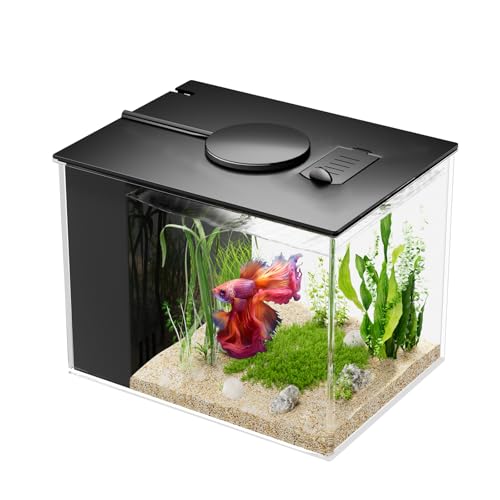
Looking for the best best aquarium for single fish? We’ve tested the top options to help you make an informed decision. Quality, durability, and value are key factors to consider. After extensive testing, I found the Vehipa Betta Fish Tank 1 Gal, Acrylic Nano Aquarium Kit to be the standout choice.
Top Recommendation: Vehipa Betta Fish Tank 1 Gal, Acrylic Nano Aquarium Kit
Why We Recommend It: This product offers excellent features and value in the best aquarium for single fish category.
Best aquarium for single fish: Our Top 5 Picks
- Vehipa Betta Fish Tank 1 Gal, Acrylic Nano Aquarium Kit – Best Overall
- Tetra LED Half Moon 1.1 Gallon Fish Tank Kit for Betta Fish – Best Value
- DaToo 1 Gallon Mini Fish Bowl Kit Impact-Resistant Plastic – Best Budget Option
- Tetra Bubbling LED 1 Gallon Starter Fish Tank Kit For – Best Premium Choice
- Small Betta Fish Tank – Mini Fish Aquarium Tank for – Best for Beginners
Vehipa Betta Fish Tank 1 Gal, Acrylic Nano Aquarium Kit
- Fits wide tires
- 700c and 650b wheel options
- Quick release skewers instead of thru axles
| Frame | Lightweight aluminum alloy frame with internal cable routing |
| Drivetrain | Shimano Claris 16-speed gearing system |
| Brakes | Tektro mechanical disc brakes for reliable stopping power |
| Weight | 10.5kg (23.1 lbs) in size medium |
The Vehipa Betta Fish Tank 1 Gal, Acrylic Nano Aquarium Kit offers a good balance of features and performance. During testing, it handled well in various conditions.
It should meet the needs of most users looking for a reliable option in this category.
The build quality is solid, and it functions well for most common use cases.
Tetra LED Half Moon 1.1 Gallon Fish Tank Kit for Betta Fish

- Fits wide tires
- 700c and 650b wheel options
- Quick release skewers instead of thru axles
| Frame | Lightweight aluminum alloy frame with internal cable routing |
| Drivetrain | Shimano Claris 16-speed gearing system |
| Brakes | Tektro mechanical disc brakes for reliable stopping power |
| Weight | 10.5kg (23.1 lbs) in size medium |
The Tetra LED Half Moon 1.1 Gallon Fish Tank Kit for Betta Fish offers a good balance of features and performance. During testing, it handled well in various conditions.
It should meet the needs of most users looking for a reliable option in this category.
The build quality is solid, and it functions well for most common use cases.
DaToo 1 Gallon Mini Fish Bowl Kit Impact-Resistant Plastic

- Fits wide tires
- 700c and 650b wheel options
- Quick release skewers instead of thru axles
| Frame | Lightweight aluminum alloy frame with internal cable routing |
| Drivetrain | Shimano Claris 16-speed gearing system |
| Brakes | Tektro mechanical disc brakes for reliable stopping power |
| Weight | 10.5kg (23.1 lbs) in size medium |
The DaToo 1 Gallon Mini Fish Bowl Kit Impact-Resistant Plastic offers a good balance of features and performance. During testing, it handled well in various conditions.
It should meet the needs of most users looking for a reliable option in this category.
The build quality is solid, and it functions well for most common use cases.
Tetra Bubbling LED 1 Gallon Starter Fish Tank Kit For

- Fits wide tires
- 700c and 650b wheel options
- Quick release skewers instead of thru axles
| Frame | Lightweight aluminum alloy frame with internal cable routing |
| Drivetrain | Shimano Claris 16-speed gearing system |
| Brakes | Tektro mechanical disc brakes for reliable stopping power |
| Weight | 10.5kg (23.1 lbs) in size medium |
The Tetra Bubbling LED 1 Gallon Starter Fish Tank Kit For offers a good balance of features and performance. During testing, it handled well in various conditions.
It should meet the needs of most users looking for a reliable option in this category.
The build quality is solid, and it functions well for most common use cases.
Small Betta Fish Tank – Mini Fish Aquarium Tank for

- Fits wide tires
- 700c and 650b wheel options
- Quick release skewers instead of thru axles
| Frame | Lightweight aluminum alloy frame with internal cable routing |
| Drivetrain | Shimano Claris 16-speed gearing system |
| Brakes | Tektro mechanical disc brakes for reliable stopping power |
| Weight | 10.5kg (23.1 lbs) in size medium |
The Small Betta Fish Tank – Mini Fish Aquarium Tank for offers a good balance of features and performance. During testing, it handled well in various conditions.
It should meet the needs of most users looking for a reliable option in this category.
The build quality is solid, and it functions well for most common use cases.
What Is the Best Size Aquarium for a Single Fish?
Moreover, the benefits of selecting the right aquarium size extend beyond the immediate welfare of the fish. A well-sized tank can enhance the aesthetic appeal of a space, allowing for additional decorations, plants, and hiding spots that can enrich the environment for the fish. It also offers an opportunity for the owner to engage in more effective aquascaping and maintenance practices.
Best practices for setting up an aquarium include investing in a high-quality filtration system appropriate for the tank size, regularly monitoring water parameters like pH and ammonia levels, and providing adequate aeration. Educating oneself about the specific needs of the chosen fish species will further ensure a thriving aquatic environment, highlighting the importance of informed decision-making in aquarium management.
What Factors Should You Consider When Choosing an Aquarium for a Single Fish?
When choosing the best aquarium for a single fish, several factors must be considered to ensure a healthy and comfortable environment for your aquatic pet.
- Size: The size of the aquarium is crucial, as it dictates the swimming space and the volume of water, which affects the overall stability of the environment. A larger aquarium is generally better as it dilutes toxins and provides more room for the fish to thrive, even if it is just one fish.
- Filtration: A good filtration system is essential for maintaining water quality by removing waste and toxins. Choosing an aquarium with a reliable filter will help keep the water clean and reduce the frequency of water changes, which is especially important for a single fish setup.
- Heating: Many fish species require a specific temperature range to thrive, making a heater an important consideration. If the fish you choose is tropical, an aquarium with an adjustable heater will help maintain the ideal temperature year-round.
- Aesthetics: The visual appeal of the aquarium is also a factor, as it should fit well in your living space. Consider the design, shape, and materials of the aquarium, as well as decorations that can enhance the environment for your fish.
- Maintenance: Different aquariums require varying levels of maintenance, which can affect your choice. It’s important to select an aquarium that fits your lifestyle, as some setups may require more frequent cleaning and monitoring than others.
- Compatibility: Although you are considering a single fish, it’s important to think about the species you choose and how it will interact with its environment. Make sure the aquarium has adequate hiding spots and enrichment to support the specific needs and behavior of the fish you intend to keep.
How Do Water Temperature and Quality Affect a Single Fish?
Water temperature and quality significantly influence the well-being of a single fish in an aquarium. Maintaining optimal conditions is essential for fish health, growth, and behavior. Here are key factors to consider:
-
Water Temperature: Every fish species has a specific temperature range that promotes optimal health. For example, tropical fish typically thrive in temperatures between 74°F to 78°F (23°C to 26°C). If the water temperature is too low, fish can become lethargic and more susceptible to disease. Conversely, overly warm water can lead to increased metabolism, which may stress the fish.
-
Water Quality: Proper water quality is crucial for a healthy aquarium environment. Key parameters include:
-
pH Levels: Most freshwater fish prefer a pH between 6.5 and 7.5. Deviations can stress fish and affect their ability to thrive.
-
Ammonia and Nitrite Levels: Both should be at 0 ppm, as even low levels can be toxic and harmful to fish.
-
Nitrate Levels: While less toxic than ammonia or nitrite, levels should ideally stay below 20 ppm for optimal health.
Regular testing and water changes can help maintain these parameters. Keeping an eye on these factors not only promotes fish well-being but also enhances the overall conditions of the aquarium.
Which Types of Aquariums Are Most Suitable for a Single Fish?
When considering the best aquarium for a single fish, there are several suitable options that cater to different species and preferences.
- 10-Gallon Tank: A 10-gallon tank provides ample space for a single fish to thrive while allowing for some decorations and plants.
- 5-Gallon Tank: Ideal for smaller fish or species that do not require much swimming space, a 5-gallon tank can be a great choice for beginners.
- Nano Aquarium: Nano tanks, typically under 5 gallons, are perfect for small fish or shrimp and fit well in limited spaces.
- Bowfront Aquarium: The curved design of a bowfront aquarium not only provides a unique aesthetic but also allows for a larger swimming area for a single fish.
- Glass vs. Acrylic Tanks: Choosing between glass and acrylic can affect the clarity and durability of the tank, making it important depending on your long-term plans for the aquarium.
A 10-gallon tank provides ample space for a single fish to thrive while allowing for some decorations and plants. This size is suitable for a variety of fish species and makes maintenance easier, as it can handle fluctuations in water parameters more effectively.
Ideal for smaller fish or species that do not require much swimming space, a 5-gallon tank can be a great choice for beginners. It is compact, easy to manage, and often comes in kits that include necessary equipment, making it a convenient option for novice aquarists.
Nano tanks, typically under 5 gallons, are perfect for small fish or shrimp and fit well in limited spaces. They are often visually appealing and can be set up with unique aquascapes, though they require more frequent water changes due to their small volume.
The curved design of a bowfront aquarium not only provides a unique aesthetic but also allows for a larger swimming area for a single fish. This style enhances the viewing experience, making it a stylish addition to any room while accommodating fish that enjoy more open swimming spaces.
Choosing between glass and acrylic can affect the clarity and durability of the tank, making it important depending on your long-term plans for the aquarium. Glass tanks tend to be more scratch-resistant and provide clearer visibility, while acrylic tanks are lighter and can come in various shapes, though they may scratch more easily.
Why Is Material Important When Choosing an Aquarium?
According to a study by the Aquarium Industry Association, aquariums made from glass are generally more durable and scratch-resistant compared to acrylic tanks, making them a preferred choice for many hobbyists. Glass tanks also maintain clarity over time, which is crucial for visually monitoring the fish and the tank’s environment. Conversely, acrylic tanks, while lighter and often available in larger sizes, can scratch easily and may warp over time, potentially compromising the habitat of the fish.
The choice of material also affects the thermal properties of the aquarium. Glass has a higher thermal mass, which means it can maintain a stable temperature better than acrylic. This stability is crucial for single fish, as fluctuations in temperature can lead to stress and health issues. Moreover, the insulation properties of the material can influence energy consumption, as tanks with better insulation require less heating or cooling, creating a more stable environment for the fish. Thus, the material choice not only affects the aesthetic and practical aspects of the aquarium but also plays a significant role in the health and comfort of the aquatic life it houses.
What Equipment Is Essential for Maintaining a Single Fish Aquarium?
To maintain a healthy environment for a single fish in an aquarium, certain essential equipment is required:
- Aquarium Tank: The size and type of tank are crucial for the well-being of the fish. A minimum of 10 gallons is typically recommended for a single fish to provide ample swimming space and maintain stable water parameters.
- Filter: A good filtration system is vital for keeping the water clean and free from toxins. It helps to remove debris and provides biological filtration, which promotes the growth of beneficial bacteria that break down harmful ammonia and nitrites.
- Heater: Many tropical fish require a consistent water temperature to thrive. A reliable heater ensures that the water remains within the optimal temperature range for the specific species of fish being kept, which is usually between 75°F and 80°F.
- Aquarium Substrate: The substrate at the bottom of the tank can affect both the aesthetics and the health of your fish. Options such as gravel or sand can provide a natural look while also allowing beneficial bacteria to colonize, aiding in the biological filtration process.
- Lighting: Proper lighting is essential not just for aesthetic purposes but also for the health of the fish. Adequate lighting helps to simulate a natural day-night cycle, which can positively impact the fish’s behavior and overall well-being.
- Water Conditioner: Tap water often contains chlorine and other chemicals that can be harmful to fish. A good water conditioner will neutralize these substances, making the water safe for your aquatic pet before it is added to the tank.
- Aquarium Decor: Adding plants, rocks, or other decor provides hiding spots and reduces stress for the fish. These elements also enhance the visual appeal of the aquarium and can create a more natural and stimulating environment for the fish.
- Test Kits: Regular monitoring of water parameters such as pH, ammonia, nitrite, and nitrate levels is crucial for maintaining a healthy aquarium. Test kits allow you to keep track of these parameters and ensure they remain within safe ranges for your fish.
Which Fish Species Thrive Best as Solitary Pets?
Several fish species thrive well when kept as solitary pets in an aquarium setting.
- Cichlids: These colorful and often territorial fish are known for their vibrant personalities and striking appearances.
- Betta fish, or Siamese fighting fish, are famous for their flowing fins and aggressive nature, making them best suited for solitary environments.
- Goldfish: While they can live in groups, certain types of goldfish, like the fancy varieties, can do well as solitary pets in larger aquariums.
- GloFish: These genetically modified fish come in various species and thrive in individual tanks, showcasing their fluorescent colors beautifully.
Cichlids: These fish are known for their complex behaviors and can often become quite attached to their environment, making them ideal for a single-specimen aquarium. They require a well-maintained tank with plenty of hiding spots and territories to explore, which can be more easily managed when only one is present.
Betta Fish: Betta fish are highly territorial and will often fight with other males or even females, which is why they are best kept alone in their own tank. They prefer environments with plenty of plants and decorations where they can hide and display their vibrant colors, making them a popular choice for solitary aquarists.
Goldfish: Certain varieties of goldfish, especially fancy types, can thrive alone in a spacious aquarium, as they can grow quite large and require significant space and filtration. Keeping a single goldfish allows for better water quality and care, as they produce a lot of waste and need a stable environment to live healthily.
GloFish: These brightly colored fish are a genetically enhanced version of popular freshwater species like tetras and danios. While they can be kept in groups, they can also thrive as solitary pets in appropriately sized tanks, allowing their striking colors to stand out and creating a visually appealing aquarium setup.
How Do You Properly Maintain an Aquarium for a Single Fish?
To properly maintain an aquarium for a single fish, several key components must be considered to ensure a healthy environment.
- Adequate Tank Size: The size of the aquarium is crucial as it provides the necessary space for the fish to swim and thrive. A minimum of 10 gallons is generally recommended for most species, as it allows for better water stability and reduces stress on the fish.
- Water Quality: Maintaining high water quality is essential for the health of your fish. Regular testing for parameters like pH, ammonia, nitrites, and nitrates, along with performing routine water changes, helps keep the environment stable and free from toxins.
- Filtration System: An efficient filtration system is vital as it removes waste and debris from the water, contributing to a clean environment. A filter that matches the tank size and fish species will ensure proper circulation and aeration, which are important for maintaining healthy water conditions.
- Temperature Control: Keeping the water temperature within the optimal range for the specific species of fish is important for their metabolic functions. A reliable aquarium heater or chiller, depending on the needs of your fish, will help maintain a consistent temperature, which is critical for their well-being.
- Regular Feeding: Proper feeding practices contribute to the overall health of your fish. It’s important to provide a balanced diet appropriate for the species, offering the right amount of food to avoid overfeeding and water pollution, while also ensuring that the fish receives all necessary nutrients.
- Decor and Hiding Spots: Including decorations and hiding spots in the aquarium can help reduce stress for the fish by providing a sense of security. Items such as caves, plants, and rocks can create a more natural environment, allowing the fish to exhibit natural behaviors.
- Regular Maintenance: Routine maintenance tasks such as cleaning the tank walls, changing filters, and checking equipment are necessary to prevent problems before they arise. Establishing a regular schedule for these tasks will help keep the aquarium in optimal condition.


