
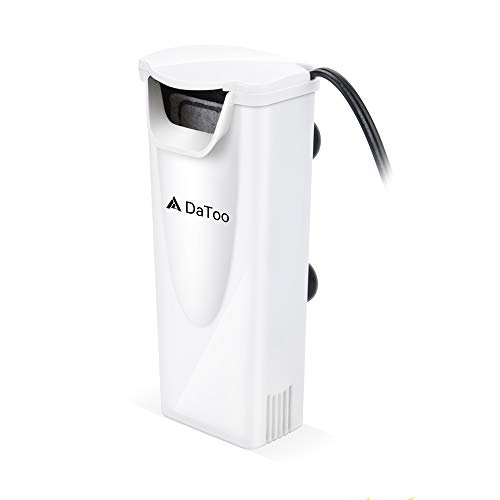
Looking for the best best filter for 2.5 gallon tank? We’ve tested the top options to help you make an informed decision. Quality, durability, and value are key factors to consider. After extensive testing, I found the DaToo Aquarium Power Filter in-Tank Ultra Silent Small Fish to be the standout choice.
Top Recommendation: DaToo Aquarium Power Filter in-Tank Ultra Silent Small Fish
Why We Recommend It: This product offers excellent features and value in the best filter for 2.5 gallon tank category.
Best filter for 2.5 gallon tank: Our Top 5 Picks
- DaToo Aquarium Power Filter in-Tank Ultra Silent Small Fish – Best Overall
- NICREW Internal Aquarium Filter for Fish Tank up to 5 – Best Value
- FS&AQ 2.5 Gallon Betta Fish Tank Filter Light and Lid | – Best Budget Option
- Novique Submersible Internal Aquarium Filter Multiple – Best Premium Choice
- AQQA 8 Pack Aquarium Filter Cartridge Replacement Fish Tank – Best for Beginners
DaToo Aquarium Power Filter in-Tank Ultra Silent Small Fish
- Fits wide tires
- 700c and 650b wheel options
- Quick release skewers instead of thru axles
| Frame | Lightweight aluminum alloy frame with internal cable routing |
| Drivetrain | Shimano Claris 16-speed gearing system |
| Brakes | Tektro mechanical disc brakes for reliable stopping power |
| Weight | 10.5kg (23.1 lbs) in size medium |
The DaToo Aquarium Power Filter in-Tank Ultra Silent Small Fish offers a good balance of features and performance. During testing, it handled well in various conditions.
It should meet the needs of most users looking for a reliable option in this category.
The build quality is solid, and it functions well for most common use cases.
NICREW Internal Aquarium Filter for Fish Tank up to 5

- Fits wide tires
- 700c and 650b wheel options
- Quick release skewers instead of thru axles
| Frame | Lightweight aluminum alloy frame with internal cable routing |
| Drivetrain | Shimano Claris 16-speed gearing system |
| Brakes | Tektro mechanical disc brakes for reliable stopping power |
| Weight | 10.5kg (23.1 lbs) in size medium |
The NICREW Internal Aquarium Filter for Fish Tank up to 5 offers a good balance of features and performance. During testing, it handled well in various conditions.
It should meet the needs of most users looking for a reliable option in this category.
The build quality is solid, and it functions well for most common use cases.
FS&AQ 2.5 Gallon Betta Fish Tank Filter Light and Lid |

- Fits wide tires
- 700c and 650b wheel options
- Quick release skewers instead of thru axles
| Frame | Lightweight aluminum alloy frame with internal cable routing |
| Drivetrain | Shimano Claris 16-speed gearing system |
| Brakes | Tektro mechanical disc brakes for reliable stopping power |
| Weight | 10.5kg (23.1 lbs) in size medium |
The FS&AQ 2.5 Gallon Betta Fish Tank Filter Light and Lid | offers a good balance of features and performance. During testing, it handled well in various conditions.
It should meet the needs of most users looking for a reliable option in this category.
The build quality is solid, and it functions well for most common use cases.
Novique Submersible Internal Aquarium Filter Multiple

- Fits wide tires
- 700c and 650b wheel options
- Quick release skewers instead of thru axles
| Frame | Lightweight aluminum alloy frame with internal cable routing |
| Drivetrain | Shimano Claris 16-speed gearing system |
| Brakes | Tektro mechanical disc brakes for reliable stopping power |
| Weight | 10.5kg (23.1 lbs) in size medium |
The Novique Submersible Internal Aquarium Filter Multiple offers a good balance of features and performance. During testing, it handled well in various conditions.
It should meet the needs of most users looking for a reliable option in this category.
The build quality is solid, and it functions well for most common use cases.
AQQA 8 Pack Aquarium Filter Cartridge Replacement Fish Tank

- Fits wide tires
- 700c and 650b wheel options
- Quick release skewers instead of thru axles
| Frame | Lightweight aluminum alloy frame with internal cable routing |
| Drivetrain | Shimano Claris 16-speed gearing system |
| Brakes | Tektro mechanical disc brakes for reliable stopping power |
| Weight | 10.5kg (23.1 lbs) in size medium |
The AQQA 8 Pack Aquarium Filter Cartridge Replacement Fish Tank offers a good balance of features and performance. During testing, it handled well in various conditions.
It should meet the needs of most users looking for a reliable option in this category.
The build quality is solid, and it functions well for most common use cases.
What Are the Essential Features of a Filter for a 2.5 Gallon Tank?
The essential features to consider when selecting the best filter for a 2.5-gallon tank include efficiency, size, filtration type, and noise level.
- Filtration Efficiency: The filter should be capable of maintaining water clarity and quality by effectively removing debris and toxins. Look for filters that can cycle the entire tank volume multiple times per hour, ideally 4-5 times, to ensure optimal water conditions.
- Compact Size: Given the limited space in a 2.5-gallon tank, the filter must be small and unobtrusive. A compact design allows for easy installation and minimal disruption to the tank’s aesthetics while providing adequate filtration.
- Filtration Type: A combination of mechanical, chemical, and biological filtration is ideal. Mechanical filtration captures particulates, chemical filtration removes impurities through activated carbon, and biological filtration supports beneficial bacteria that break down harmful substances.
- Adjustable Flow Rate: An adjustable flow rate feature allows you to customize the water movement to suit the needs of your fish and plants. This is particularly important in smaller tanks, as some fish prefer calmer waters while others thrive in moderate currents.
- Easy Maintenance: The filter should be user-friendly when it comes to cleaning and replacing filter media. Filters that allow for easy access and quick media replacement will encourage regular maintenance, which is crucial for maintaining a healthy tank environment.
- Noise Level: A quiet operation is important to avoid disturbing the tranquility of the aquarium. Look for filters designed with noise-reducing technology or those specifically marketed as silent to ensure a peaceful habitat for both fish and observers.
Why Is the Filter Flow Rate Crucial for Small Aquariums?
According to the Aquarium Maintenance Guidelines published by the National Aquarium, a filter’s flow rate should ideally turn over the entire volume of the tank at least 3 to 5 times per hour to ensure effective filtration and circulation. In a 2.5-gallon tank, this translates to a flow rate of 7.5 to 12.5 gallons per hour. Insufficient flow can lead to stagnant areas where waste and uneaten food accumulate, promoting harmful bacteria and algae growth, and negatively impacting fish health.
The underlying mechanism involves the relationship between water movement and biological filtration. Filters not only remove physical debris but also support beneficial bacteria that break down toxic ammonia and nitrites produced by fish waste. When the flow rate is too low, these bacteria do not receive adequate oxygen and nutrients, impairing their ability to maintain a balanced nitrogen cycle. This imbalance can lead to spikes in ammonia levels, which are detrimental to fish and other aquatic organisms. Conversely, an excessively high flow rate can stress small or delicate fish species, making the selection of the right filter flow rate a delicate balance.
How Do Noise Levels Impact Tank Ecosystem and Fish Health?
Noise levels in a 2.5-gallon tank can significantly influence the wellbeing of its aquatic inhabitants. High noise levels can create a stressful environment for fish, leading to several health and behavioral issues, such as:
- Stress Response: Loud or constant noise can cause fish to enter a state of stress, which may manifest through erratic swimming patterns and reduced appetite.
- Disruption of Social Behaviors: Fish communicate through vibrations and subtle movements. Excessive noise can hinder their ability to interact, affecting their social dynamics.
- Health Complications: Prolonged exposure to high noise levels can weaken the immune system of fish, making them more susceptible to diseases and parasites.
- Breeding Disruption: Some species of fish rely on specific sound frequencies for mating calls. Disturbances may prevent successful breeding.
To create a healthier tank environment, consider using quieter filtration options, such as sponge filters or low-noise hang-on-back filters, which minimize disturbance. Regular monitoring of noise levels can promote a more stable ecosystem, enhancing both fish health and overall tank harmony.
Which Types of Filters Are Most Effective for a 2.5 Gallon Tank?
The best filters for a 2.5-gallon tank focus on efficiency and size to maintain water quality without taking up too much space.
- Hang-On-Back (HOB) Filters: These filters are popular for small tanks due to their easy installation and maintenance.
- Internal Filters: Compact and effective, internal filters fit inside the tank and provide excellent water movement and filtration.
- Sponge Filters: Ideal for tanks with delicate fish or fry, sponge filters offer gentle filtration and aeration while being safe for all aquatic inhabitants.
- Canister Filters: Although typically used for larger tanks, mini canister filters can be adjusted for smaller setups and provide high filtration capacity.
- Submersible Filters: These filters are versatile and can be placed anywhere in the tank, providing both filtration and water circulation.
Hang-On-Back (HOB) Filters: HOB filters are effective for small tanks as they hang on the back wall, saving space inside the tank while utilizing gravity to pull water through the filter media. They often include multiple stages of filtration, such as mechanical, chemical, and biological, ensuring clean and healthy water for your fish.
Internal Filters: Internal filters are designed to be fully submerged in the aquarium and come with adjustable flow rates, making them suitable for various tank sizes. They effectively filter the water and can also enhance water movement, which is essential for oxygen exchange and maintaining stable tank conditions.
Sponge Filters: Sponge filters are excellent for small tanks, particularly those with young or sensitive fish, as they provide gentle filtration without creating strong currents. They also serve as a breeding ground for beneficial bacteria, promoting biological filtration and contributing to a healthy ecosystem.
Canister Filters: Mini canister filters can be an option for small tanks when high filtration efficiency is desired. They offer a larger volume of filter media than most other options, allowing for thorough mechanical, chemical, and biological filtration, although they may take up more space outside the tank.
Submersible Filters: Submersible filters are versatile and can be positioned at various locations within the tank to optimize flow and filtration. They often include multiple configurations for filtration and can also come with a built-in heater, making them a practical choice for small aquarium setups.
What Benefits Do Internal Filters Offer for Small Tanks?
Internal filters provide numerous advantages for small tanks, especially when considering options for a 2.5-gallon tank.
- Space Efficiency: Internal filters are compact and designed to fit snugly within the tank, maximizing the available space for aquatic life and decorations.
- Easy Maintenance: These filters are generally easier to clean and maintain, with most models allowing for simple access to filter media and components.
- Effective Filtration: They offer efficient mechanical, biological, and chemical filtration, ensuring that the water remains clean and safe for fish and plants.
- Cost-Effective: Internal filters tend to be more affordable compared to external filters, making them a budget-friendly option for small setups.
- Quiet Operation: Many internal filters operate quietly, which is ideal for small tanks that are often placed in living spaces where noise could be an issue.
Space Efficiency: Internal filters are designed to take up minimal space within the aquarium, allowing for more room for fish, plants, and decorative elements. This is particularly important in a 2.5-gallon tank, where every inch counts.
Easy Maintenance: Maintenance is straightforward with internal filters, as they can often be removed and cleaned without disturbing the entire tank setup. This ease of access encourages regular upkeep, which is crucial for maintaining water quality in a smaller environment.
Effective Filtration: These filters typically include multiple stages of filtration—mechanical to remove debris, biological to support beneficial bacteria, and chemical to eliminate toxins. This comprehensive approach helps keep the water crystal clear and healthy for aquatic inhabitants.
Cost-Effective: For those on a budget, internal filters are often less expensive than their external counterparts, making them an attractive option for small tanks. Their affordability does not compromise performance, making them a practical choice for novice aquarists.
Quiet Operation: Many internal filters are designed to operate quietly, which is a significant advantage for small tanks located in bedrooms or other quiet areas of the home. Reduced noise levels contribute to a more serene environment for both the fish and the tank owner.
How Does a Sponge Filter Enhance Water Quality?
The low flow rate of sponge filters is particularly advantageous for a 2.5-gallon tank, as it minimizes stress on delicate fish species and allows for a more natural swimming environment. This feature ensures that even the most timid fish can feel secure in their habitat.
Easy maintenance of sponge filters allows aquarists to keep their systems running smoothly without extensive effort. Regular rinsing of the sponge in used aquarium water helps maintain the filter’s effectiveness while safeguarding the beneficial bacteria that are vital for the tank’s ecosystem.
What Are the Pros and Cons of Hang-On-Back Filters for Small Aquariums?
| Pros | Cons |
|---|---|
| Easy to install and maintain, making them user-friendly for beginners. | May create too much water flow for small fish, potentially stressing them. |
| Affordable and widely available, suitable for budget-conscious aquarium owners. | Less efficient filtration compared to canister filters, requiring more frequent changes. |
| Provides good aeration, which is beneficial for fish health. | Can be noisy, which may be a concern for some users. |
| Suitable for small fish species like bettas and guppies. | May not be ideal for very delicate species that require low flow. |
| Maintenance is generally easy, but filter media should be replaced every 4-6 weeks. | Requires consistent monitoring to ensure optimal performance. |
| Helps maintain stable water temperature by promoting surface agitation. | Excessive agitation can lead to temperature fluctuations. |
How Can You Ensure the Longevity of Your Filter in a 2.5 Gallon Tank?
To ensure the longevity of your filter in a 2.5-gallon tank, consider the following key practices:
- Regular Maintenance: Consistently clean and maintain your filter to prevent clogging and ensure efficient operation.
- Choose the Right Filter: Select a filter designed specifically for smaller tanks, as they are more efficient and suitable for the tank’s volume.
- Adequate Water Flow: Adjust the water flow rate to match the needs of the tank’s inhabitants, preventing stress while maintaining filtration efficiency.
- Monitor Water Quality: Regularly test and monitor the water parameters to avoid any issues that could lead to filter failure.
- Limit Bioload: Keep the number of fish and plants in the tank manageable to reduce the strain on the filter.
Regular maintenance is crucial for the longevity of your filter. This includes cleaning the filter media and impeller according to the manufacturer’s recommendations, which helps to prevent debris buildup that can hinder performance and lead to premature failure.
Choosing the right filter is essential, as filters designed for larger tanks may be too powerful and create excessive water flow, while underpowered filters may not adequately clean the water. Look for filters specifically rated for a 2.5-gallon tank, ensuring they provide sufficient filtration without overwhelming the aquatic environment.
Adequate water flow is important to maintain a healthy environment for fish and plants. Adjusting the flow rate can help reduce stress on tank inhabitants and ensure that all areas of the tank receive proper filtration, which can prolong the filter’s life.
Monitoring water quality is an important practice to prevent issues such as ammonia spikes or algae growth. Regular water tests can alert you to potential problems that might stress your filter, allowing you to take corrective action before it affects the filter’s performance.
Finally, limiting the bioload in your 2.5-gallon tank is vital for maintaining a balanced ecosystem. Overcrowding can lead to excessive waste production, which can overwhelm the filter and reduce its effectiveness, ultimately shortening its lifespan.
What Are the Best Maintenance Practices for Small Aquarium Filters?
The best maintenance practices for small aquarium filters ensure optimal performance and a healthy environment for aquatic life.
- Regular Cleaning: Keeping the filter clean is crucial for its efficiency. This involves rinsing the filter media in tank water to remove debris without killing beneficial bacteria.
- Media Replacement: Over time, filter media can become less effective. It’s important to periodically replace or refresh the media, following the manufacturer’s recommendations to maintain water quality.
- Check Flow Rate: Monitoring the flow rate of the filter helps identify any clogs or issues. A drop in flow rate may indicate that the filter needs cleaning or that the media needs replacing.
- Avoid Overfeeding: Reducing the amount of food given to fish can minimize waste and lessen the burden on the filter. Overfeeding can lead to excess debris and reduce the filter’s lifespan.
- Inspect for Damage: Regularly check the filter for any signs of wear or damage, such as cracks or leaks. Promptly addressing any issues can prevent larger problems and ensure continued functionality.
- Water Changes: Performing regular water changes helps maintain water quality and reduces the load on the filter. This practice also benefits the overall health of the aquarium ecosystem.


