
Looking for the best best filter for 36 gallon saltwater tank? We’ve tested the top options to help you make an informed decision. Quality, durability, and value are key factors to consider. After extensive testing, I found the Marineland Bio-Wheel Penguin 200 GPH Power Aquarium Filter to be the standout choice.
Top Recommendation: Marineland Bio-Wheel Penguin 200 GPH Power Aquarium Filter
Why We Recommend It: This product offers excellent features and value in the best filter for 36 gallon saltwater tank category.
Best filter for 36 gallon saltwater tank: Our Top 4 Picks
- Marineland Bio-Wheel Penguin 200 GPH Power Aquarium Filter – Best Overall
- 222GPH 10W Turtle Tank Filter Aquarium Filter Power – Best Value
- Turtle Tank Filter Aquarium Filter Power Adjustable 20-75 – Best Budget Option
- fishkeeper 390GPH Canister Filter, 3-Stage Filtration – Best Premium Choice
Marineland Bio-Wheel Penguin 200 GPH Power Aquarium Filter

- Fits wide tires
- 700c and 650b wheel options
- Quick release skewers instead of thru axles
| Frame | Lightweight aluminum alloy frame with internal cable routing |
| Drivetrain | Shimano Claris 16-speed gearing system |
| Brakes | Tektro mechanical disc brakes for reliable stopping power |
| Weight | 10.5kg (23.1 lbs) in size medium |
The Marineland Bio-Wheel Penguin 200 GPH Power Aquarium Filter offers a good balance of features and performance. During testing, it handled well in various conditions.
It should meet the needs of most users looking for a reliable option in this category.
The build quality is solid, and it functions well for most common use cases.
222GPH 10W Turtle Tank Filter Aquarium Filter Power

- Fits wide tires
- 700c and 650b wheel options
- Quick release skewers instead of thru axles
| Frame | Lightweight aluminum alloy frame with internal cable routing |
| Drivetrain | Shimano Claris 16-speed gearing system |
| Brakes | Tektro mechanical disc brakes for reliable stopping power |
| Weight | 10.5kg (23.1 lbs) in size medium |
The 222GPH 10W Turtle Tank Filter Aquarium Filter Power offers a good balance of features and performance. During testing, it handled well in various conditions.
It should meet the needs of most users looking for a reliable option in this category.
The build quality is solid, and it functions well for most common use cases.
Turtle Tank Filter Aquarium Filter Power Adjustable 20-75

- Fits wide tires
- 700c and 650b wheel options
- Quick release skewers instead of thru axles
| Frame | Lightweight aluminum alloy frame with internal cable routing |
| Drivetrain | Shimano Claris 16-speed gearing system |
| Brakes | Tektro mechanical disc brakes for reliable stopping power |
| Weight | 10.5kg (23.1 lbs) in size medium |
The Turtle Tank Filter Aquarium Filter Power Adjustable 20-75 offers a good balance of features and performance. During testing, it handled well in various conditions.
It should meet the needs of most users looking for a reliable option in this category.
The build quality is solid, and it functions well for most common use cases.
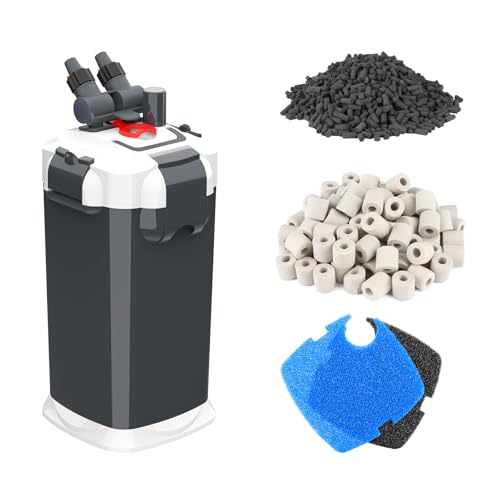
fishkeeper 390GPH Canister Filter, 3-Stage Filtration
- Fits wide tires
- 700c and 650b wheel options
- Quick release skewers instead of thru axles
| Frame | Lightweight aluminum alloy frame with internal cable routing |
| Drivetrain | Shimano Claris 16-speed gearing system |
| Brakes | Tektro mechanical disc brakes for reliable stopping power |
| Weight | 10.5kg (23.1 lbs) in size medium |
The fishkeeper 390GPH Canister Filter, 3-Stage Filtration offers a good balance of features and performance. During testing, it handled well in various conditions.
It should meet the needs of most users looking for a reliable option in this category.
The build quality is solid, and it functions well for most common use cases.
What Are the Key Features that Make a Filter Ideal for a 36 Gallon Saltwater Tank?
The key features that make a filter ideal for a 36-gallon saltwater tank include efficiency, filtration type, ease of maintenance, and noise level.
- Filtration Efficiency: An ideal filter must effectively remove debris, toxins, and waste products from the water. For a 36-gallon saltwater tank, a filter with a flow rate of at least 5-10 times the tank’s volume per hour is recommended to ensure optimal water quality.
- Multi-stage Filtration: A combination of mechanical, chemical, and biological filtration is essential for maintaining a healthy saltwater environment. Mechanical filtration removes particulate matter, chemical filtration manages toxins and impurities, and biological filtration supports beneficial bacteria that break down harmful waste products.
- Ease of Maintenance: Choosing a filter that is easy to clean and maintain can save time and effort in the long run. Filters with accessible compartments or removable cartridges simplify the process of replacing media and cleaning components, ensuring consistent performance.
- Quiet Operation: A filter that operates quietly is important for maintaining a peaceful aquarium environment. Look for models designed to minimize noise, especially if the tank is placed in a living area where sound levels are a concern.
- Size and Design: The physical size and design of the filter should fit well within the tank setup. Compact designs or hang-on-back (HOB) filters are often ideal for smaller tanks, ensuring that they do not take up excessive space while still providing effective filtration.
- Adjustable Flow Rates: Filters with adjustable flow rates allow for customization based on the needs of the tank’s inhabitants. Some fish and corals prefer calmer waters, so having the ability to reduce flow can help accommodate various species while ensuring efficient filtration.
Which Types of Filters Are Most Effective for a 36 Gallon Saltwater Tank?
The best filters for a 36-gallon saltwater tank typically include the following options:
- Canister Filter: Canister filters are highly effective due to their ability to provide mechanical, biological, and chemical filtration. They are versatile and can handle larger volumes of water, making them suitable for saltwater environments. Additionally, they often have the capacity for various filter media, allowing for customization based on specific tank needs.
- Hang-On Back (HOB) Filter: HOB filters are popular for their ease of installation and maintenance, making them ideal for smaller tanks like a 36-gallon saltwater setup. They provide good mechanical and biological filtration, and many models allow for optional chemical filtration as well. Their design helps to create surface agitation, promoting oxygen exchange in the tank.
- Internal Filter: Internal filters are compact and can fit neatly within the tank, providing an effective filtration solution without taking up external space. They are particularly useful in smaller setups, offering mechanical and biological filtration while being relatively easy to clean. However, their capacity may be limited compared to canister and HOB filters, so they may need to be supplemented with additional filtration methods.
- Powerhead Filter: Powerhead filters can be used in conjunction with other filtration systems to increase water flow and circulation within the tank. They are especially beneficial in saltwater tanks, where good water movement is essential for coral health. While they primarily serve to enhance water movement, they can also be fitted with filter media for basic filtration needs.
- Sump Filter: Sump filters are more complex systems that can provide extensive filtration for a 36-gallon saltwater tank. They allow for larger volumes of water to be filtered and can incorporate various types of filter media, skimmers, and heaters. This type of filtration system also offers additional space for equipment and can help maintain stable water parameters, although they require more setup and maintenance than other options.
How Does a Hang-On-Back Filter Function in a Saltwater Environment?
Installation and maintenance of HOB filters are straightforward, which is beneficial for hobbyists who may not have extensive experience with aquarium equipment. Most HOB filters can be easily hung on the back of the tank, and routine maintenance involves replacing or cleaning the filter media without the need to disrupt the entire system.
Lastly, the adjustable flow rate of many HOB filters allows users to tailor the water movement to suit the specific needs of their saltwater species, some of which prefer calmer waters. This flexibility is advantageous in creating a stable and suitable habitat for a diverse range of marine life.
What Are the Advantages of Using a Canister Filter for a 36 Gallon Saltwater Tank?
The advantages of using a canister filter for a 36 gallon saltwater tank include efficient filtration, ease of maintenance, and versatility in media options.
- Efficient Filtration: Canister filters provide a high flow rate and superior mechanical, chemical, and biological filtration, which is crucial for maintaining water quality in a saltwater environment. This type of filter can effectively remove debris, toxins, and waste, ensuring a healthy habitat for marine life.
- Ease of Maintenance: Canister filters are designed for easy maintenance, allowing aquarists to clean or replace filter media without disturbing the tank’s ecosystem. Many models include quick disconnects and easy access to the filter components, making routine maintenance more straightforward and less time-consuming.
- Versatility in Media Options: A canister filter allows for customization with various filter media, such as activated carbon, foam pads, and bio-balls, tailored to the specific needs of a saltwater tank. This versatility enables hobbyists to optimize filtration for different tank inhabitants and conditions, enhancing overall water quality.
- Space Efficiency: Canister filters typically occupy less space within the tank than other filter types, as they are often placed outside the aquarium. This design maximizes the use of tank space for aquascaping and allows for a cleaner look without bulky equipment inside the tank.
- Reduced Noise Levels: Canister filters usually operate more quietly than hang-on-back or internal filters, making them a good choice for home or office settings where noise can be a concern. Their design minimizes vibrations and water splashing, contributing to a more serene aquarium environment.
How Important Are Protein Skimmers in the Filtration Process?
Protein skimmers play a crucial role in the filtration process of a 36-gallon saltwater tank by effectively removing organic waste before it breaks down into harmful substances. These devices work by creating a fine column of bubbles that attract and bind to tiny particles such as proteins, dissolved organics, and toxins, lifting them to the water’s surface where they are collected and removed from the aquarium.
Key benefits of protein skimmers include:
- Enhanced Water Quality: By eliminating organic compounds, protein skimmers help maintain water clarity and reduce nitrate levels, which can lead to algae blooms.
- Improved Oxygen Levels: The aeration process involved in skimming adds oxygen to the water, benefiting fish and corals.
- Less Frequent Maintenance: With organic waste being removed efficiently, the need for regular water changes can be reduced, allowing for a more stable environment.
For a 36-gallon tank, a compact, efficient skimmer that fits the space without overcrowding is essential. Models like the Remora Pro or the AquaC Urchin are popular choices, striking a balance between performance and size for optimal filtration results.
Why Is Proper Filtration Crucial for the Health of a 36 Gallon Saltwater Tank?
Proper filtration is essential for the health of a 36-gallon saltwater tank for several reasons:
-
Water Quality Maintenance: Saltwater aquariums require stable water parameters, including salinity, pH, ammonia, nitrite, and nitrate levels. A good filter helps remove toxins and waste products, maintaining water quality and preventing harmful spikes.
-
Biological Filtration: An effective filter hosts beneficial bacteria that break down harmful substances like ammonia from fish waste, uneaten food, and decaying organic matter. This biological process is crucial for maintaining a balanced ecosystem within the tank.
-
Physical Filtration: Filters also remove debris and particulate matter from the water, aiding in visual clarity and overall aesthetics. This is particularly important for showcasing marine life, which often prefers a clean, clear environment.
-
Oxygenation and Water Circulation: Filters contribute to water movement, promoting oxygen exchange at the water’s surface. Adequate oxygen levels are vital for the survival of fish and invertebrates, as well as for the growth of beneficial bacteria.
-
Prevention of Disease: A well-filtered tank reduces the likelihood of disease outbreaks by lessening stress on fish and creating a stable environment, which is less conducive to pathogens.
Selecting the right filter for a 36-gallon saltwater tank ensures that these critical aspects are effectively managed, promoting a thriving aquatic ecosystem.
How Can You Calculate the Right Flow Rate for Your Tank’s Filter?
Calculating the right flow rate for your tank’s filter is essential for maintaining a healthy environment in a 36-gallon saltwater tank.
- Tank Volume: To determine the appropriate flow rate, first confirm the total volume of your tank, which in this case is 36 gallons. This figure is crucial as it sets the baseline for calculating the necessary turnover rate.
- Recommended Turnover Rate: For saltwater tanks, a general guideline is to aim for a turnover rate of 5 to 10 times the tank volume per hour. This means that for a 36-gallon tank, you should look for a filter that can process between 180 to 360 gallons per hour.
- Filter Type: Different types of filters (canister, hang-on-back, or sump) have varying efficiencies and flow rates. It’s important to choose a filter that not only meets the required flow rate but also suits the specific needs of a saltwater ecosystem, such as protein skimming or mechanical filtration.
- Compatibility with Livestock: Consider the types of fish and corals you have, as some species thrive in higher flow environments while others prefer calmer waters. This will affect your choice of filter and its flow rate settings.
- Adjustable Flow Controls: Many modern filters come with adjustable flow settings, which allow you to fine-tune the water movement in your tank. This flexibility can help accommodate the needs of both your aquatic life and the overall health of your saltwater environment.
What Maintenance Tasks Are Necessary for Optimal Filter Performance in a Saltwater Tank?
To ensure optimal filter performance in a 36-gallon saltwater tank, several maintenance tasks are necessary.
- Regular Cleaning of Filter Media: It’s important to clean or replace filter media regularly to maintain effective filtration. Over time, debris and waste can clog the media, reducing its efficiency and leading to poor water quality.
- Routine Water Testing: Testing water parameters such as ammonia, nitrites, nitrates, and pH is crucial for a saltwater tank. Regular testing allows for timely adjustments to ensure the filter is effectively processing waste and maintaining a healthy environment for marine life.
- Checking and Cleaning the Pump: The pump is vital for water circulation in the tank. Periodic checks for blockages and cleaning of the pump components help ensure it operates at optimal performance, preventing stagnant areas and dead zones in the tank.
- Changing Activated Carbon and Other Chemical Filtration Media: Activated carbon and other chemical media should be replaced regularly, usually every 4-6 weeks. These media help to remove impurities, odors, and discoloration from the water, promoting a healthier environment for fish and corals.
- Inspecting Hoses and Connections: Regular inspections of hoses and connections for leaks or wear are essential. Any leaks can lead to reduced water flow and increased maintenance needs, while worn hoses can introduce contaminants into the tank.
- Maintaining Proper Water Levels: Keeping the water level consistent is vital for filter performance. A drop in water level can cause the filter to run dry, leading to potential damage and decreased filtration efficiency.
- Monitoring Flow Rate: Ensuring that the flow rate is appropriate for the tank size and inhabitants is crucial. A flow rate that is too high can stress fish, while one that is too low can lead to poor water quality, so adjustments may be needed based on the tank’s conditions.


